
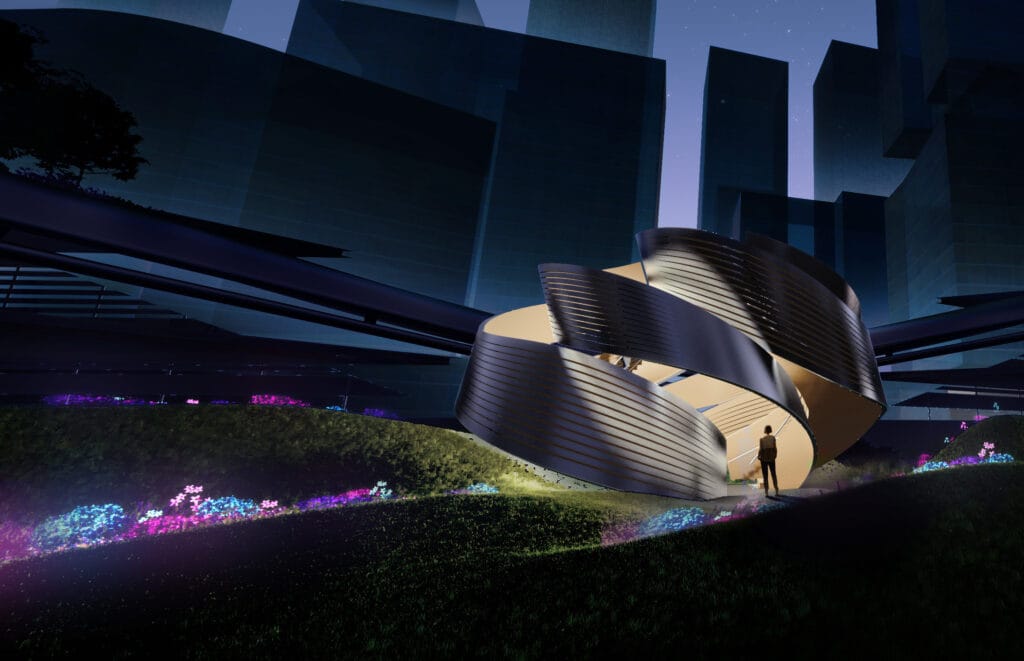
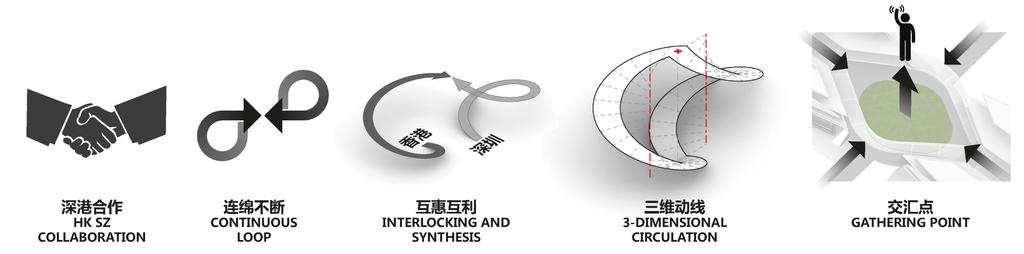
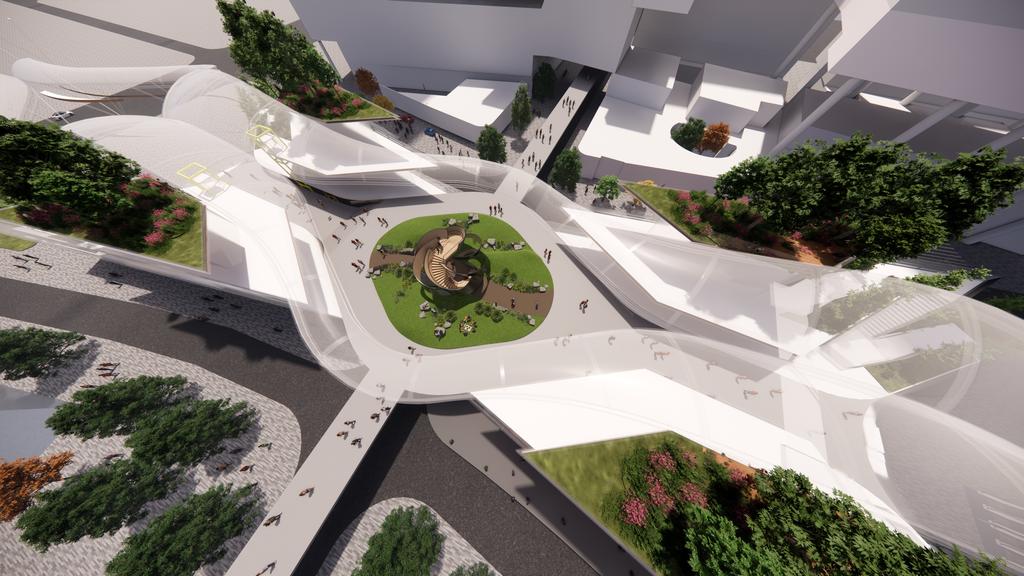
Urban Link is a new landmark that encourages public interaction and exploration of three-dimensional space. We aim to use the concept of “human connection” as the design principle, enabling people to experience and understand the unique landscape of the Shenzhen-Hong Kong Plaza from a new height and perspective. The landscape seamlessly connects with the surrounding circulation, guiding people into the heart of the art installation. The design symbolizes unity and collaboration. Inspired by the form of Chinese knotting, the three-dimensional logic of the knot is transformed into a progressively ascending spatial experience.
The installation’s unique steel structure transitions smoothly into a unified form, with its vibrant shell emphasizing continuous flowing lines. Light strips along the edges illuminate its silhouette in the dark, while the aluminium surface reflects the surrounding environment, bringing a fresh visual experience to the plaza at night. Luminous plants are placed around the installation—absorbing sunlight during the day and emitting a soft glow at night. This creates a gentle contrast with the art installation, drawing visitors in and inviting them to explore.
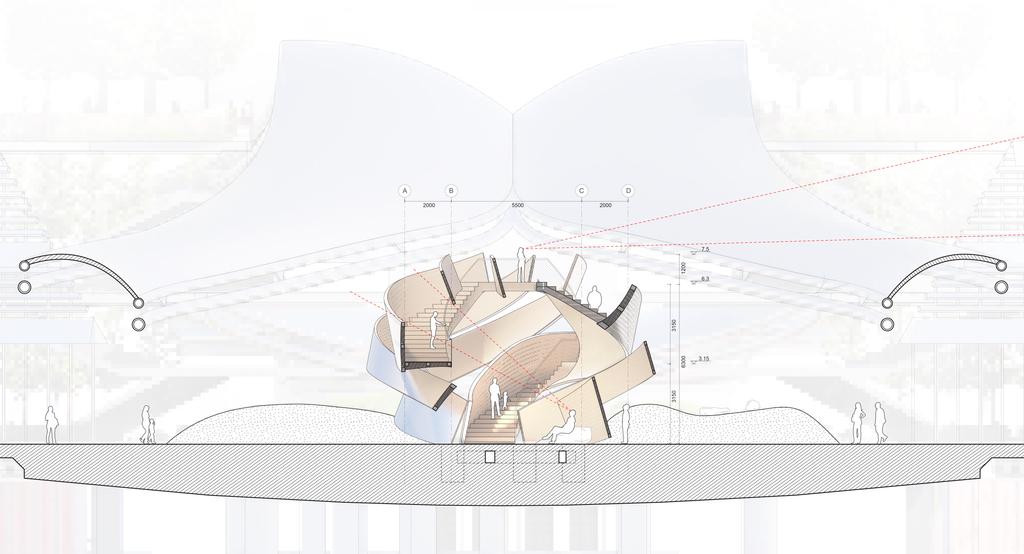
The installation’s observation deck reaches seven point five meters, elevating visitors’ perspectives above the plaza level. The design also interacts with the pedestrians on the second floor of the plaza, integrating both the plaza and the broader cityscape.
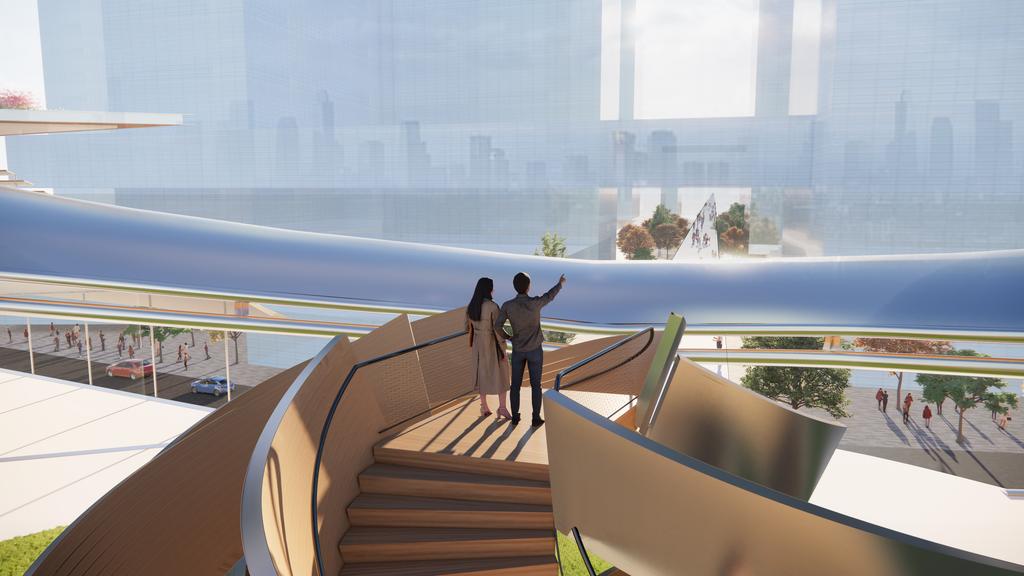
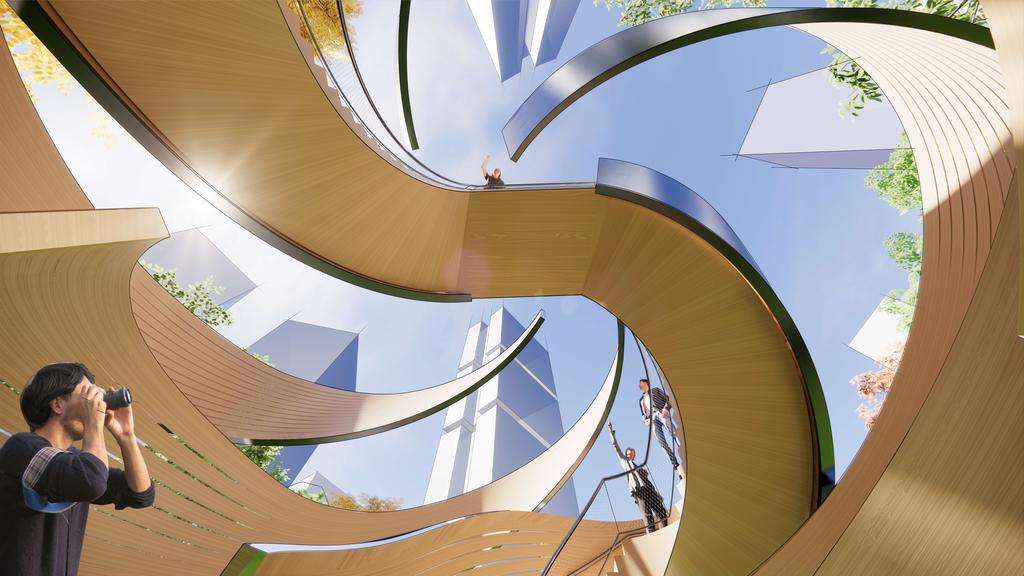
An observation deck is set at the top, allowing visitors to ascend to a higher vantage point and take in distant views. Serving as a vertical extension of the plaza, the installation offers a unique perspective of the city, enabling people to observe the surrounding urban landscape and establishing a visual connection with Qianhai.
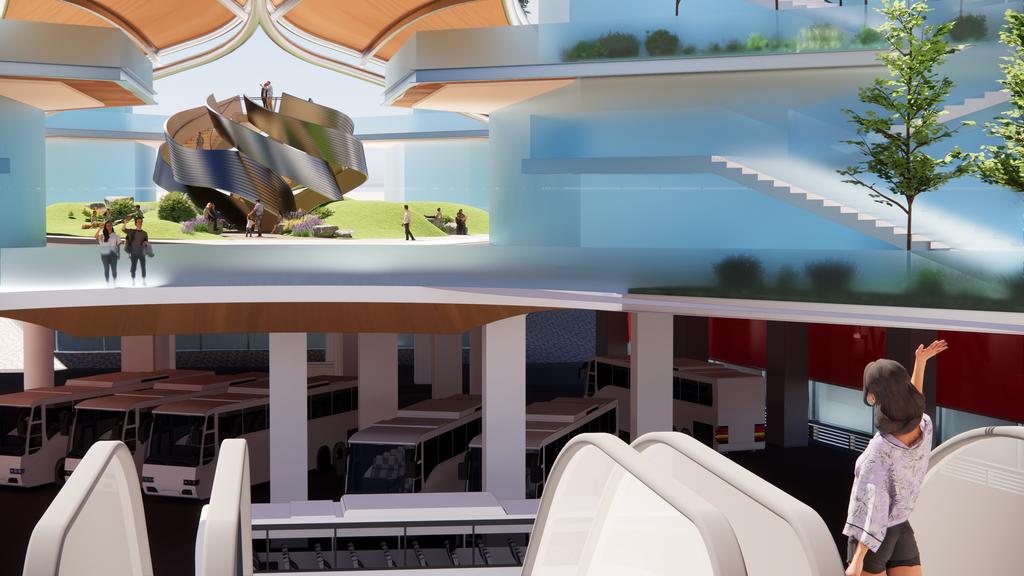
Designed for the pace of busy urban life, the art installation invites people to reconnect with space and community—creating an architectural dialogue that fosters engagement and interaction.
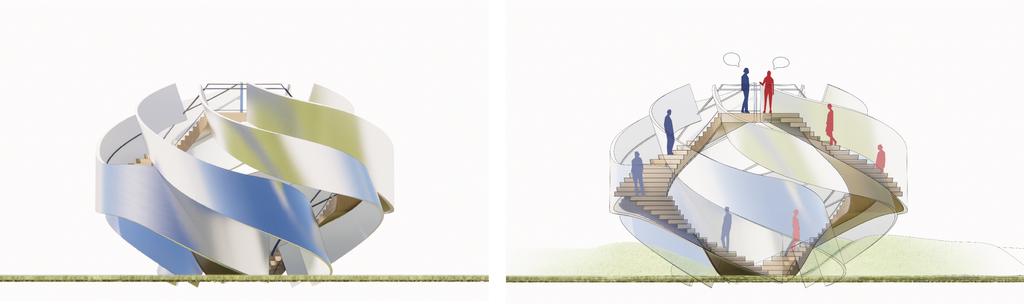
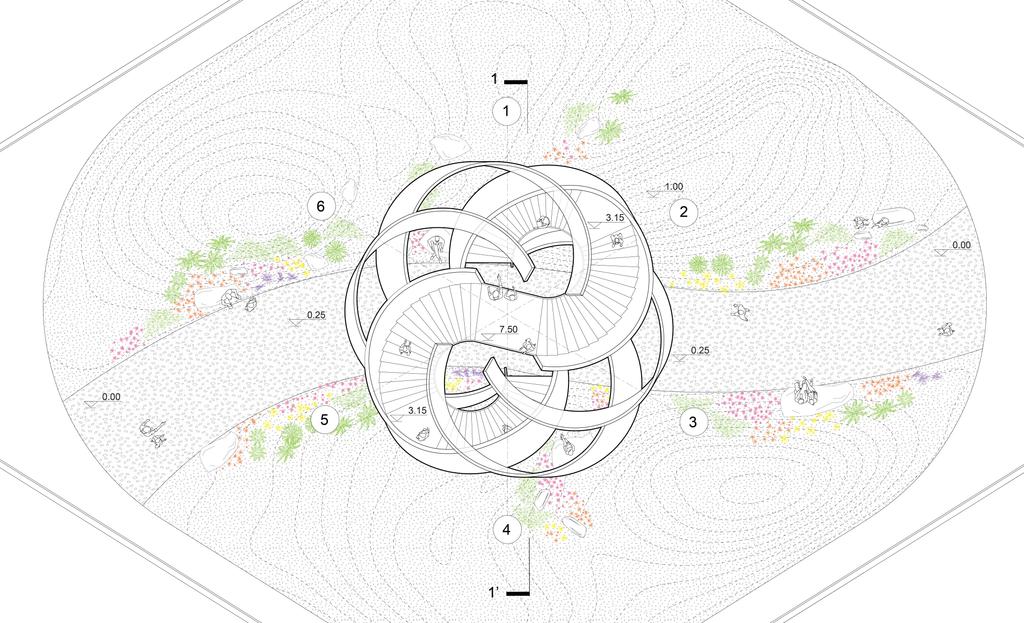
The installation’s continuous staircase and three-dimensional circulation pathways attract visitors to explore and encourage interaction among people. Designed to be viewed from multiple directions across the plaza, the installation takes a dynamic flowing form, offering a new visual impression from every angle. As a continuation of the site’s ribbon-like design language, it becomes a focal point within the urban living room.
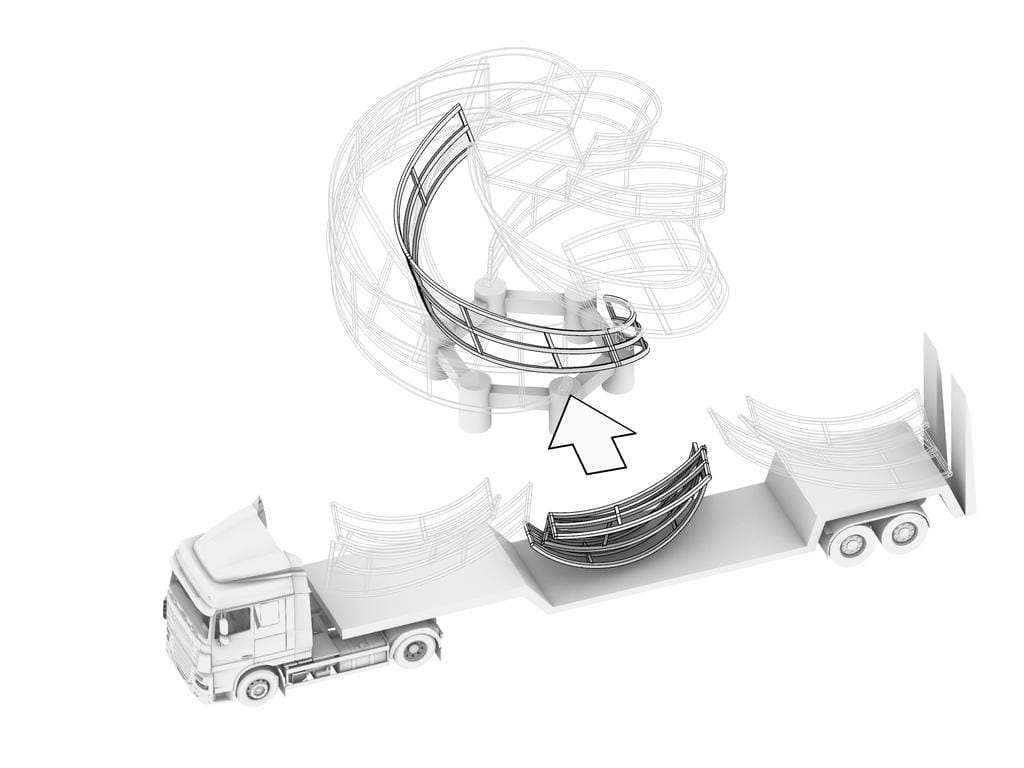
The installation uses multiple spirals to outline a petal-shaped form, creating an innovative structure. Ascending along the geometric framework, two staircases connect at the top, forming a continuous three-dimensional circulation path. The design utilizes prefabricated components that are transported to the site for final assembly. This approach helps control costs, improves construction efficiency, and ensures quality.
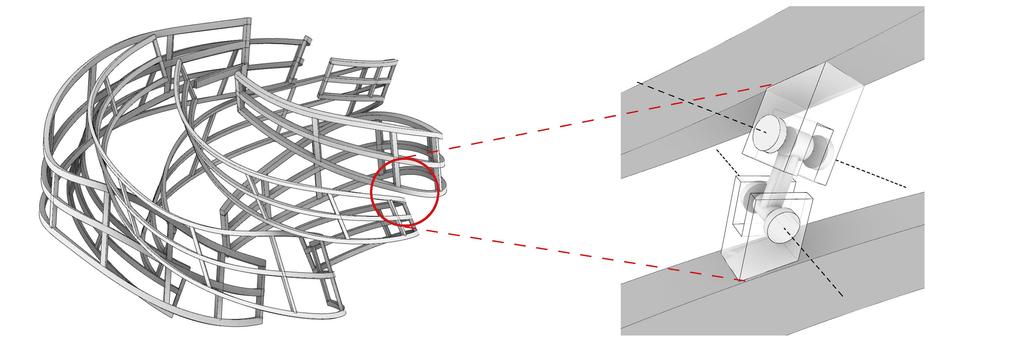
The defining feature of a reciprocal structure is that each member is simultaneously supported by and supports its adjacent members. Based on the principle of inclined geometry, it creates an architectural aesthetic distinct from the surrounding buildings. The use of two-axis joints helps minimize on-site construction errors, making the art installation easy to adjust, disassemble, and relocate.
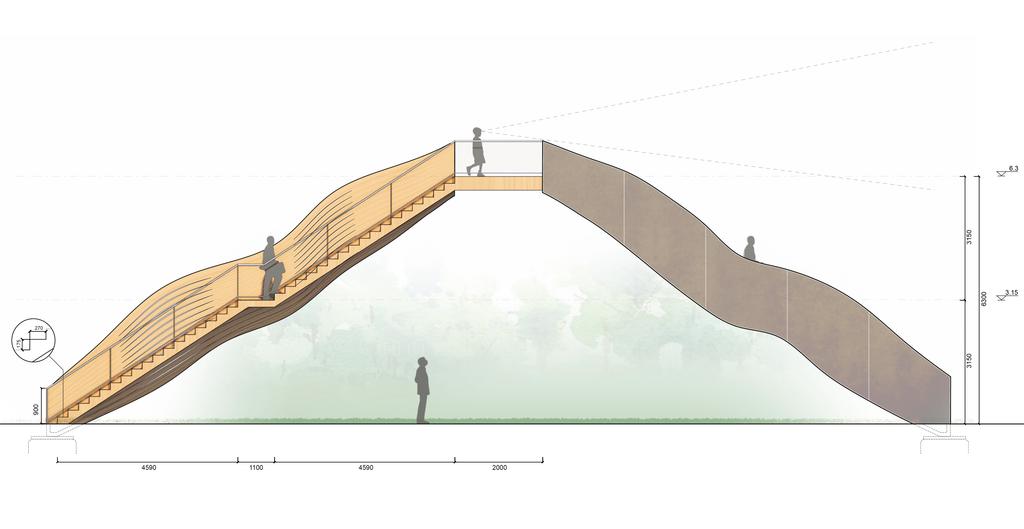
The installation’s unique steel structure transitions smoothly into a cohesive whole, with its dynamic shell emphasizing continuous, flowing lines. Light strips along the edges illuminate its silhouette in the dark, while the aluminium surface reflects the surrounding environment, bringing a fresh visual dimension to the plaza at night. The design fosters a dialogue between traditional and contemporary elements. The outer aluminium shell contrasts with the inner laminated bamboo—a warm versus cool material expression that reflects the duality often found in Chinese architectural materiality.
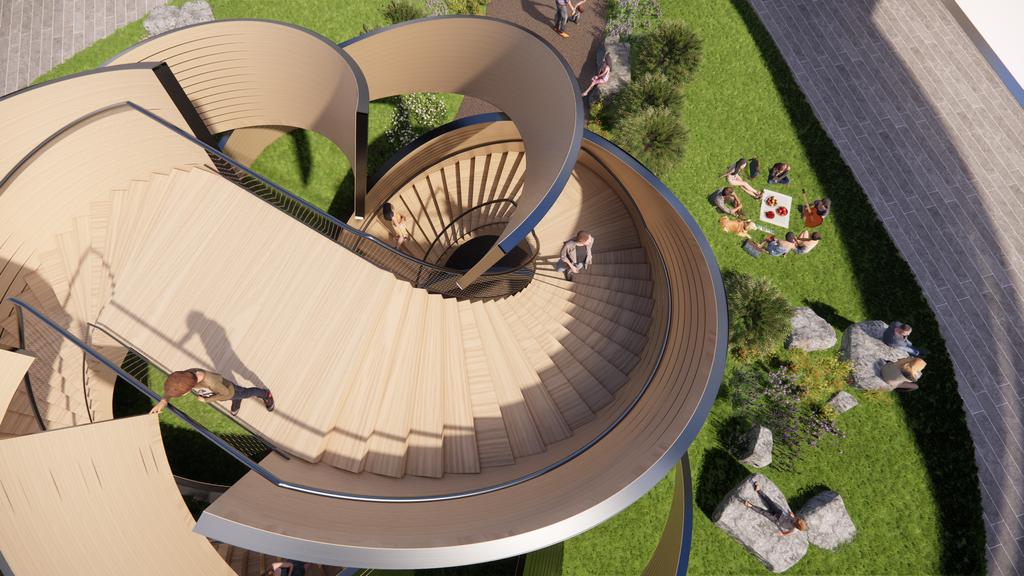
From the base of the installation to its heights, the space gradually unfolds—transitioning from enclosed to open. This creates a unique contrast in the visitor’s experience while offering fresh perspectives of the surrounding environment.