

大角咀山丘葬身大海,成全我們的工業發展,這個故事從何說起?
The hills of Tai Kok Tsui surrendered to the sea, for the sake of progress. Where does the story begin?
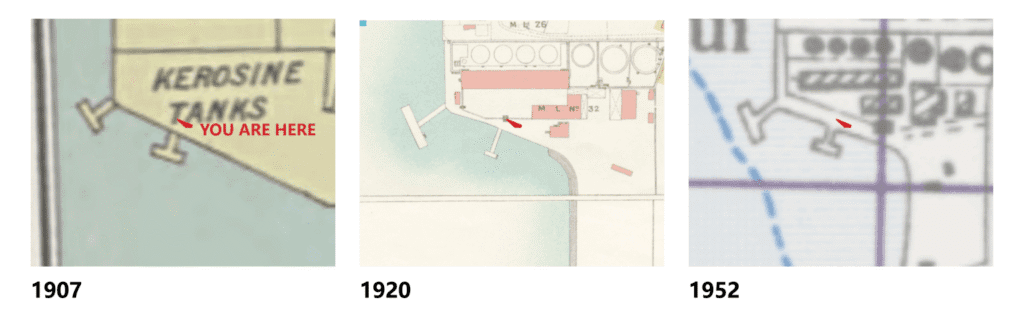
Coastal map of Tai Kok Tsui in 1907 to 1952
大角咀海岸線1907至1952年

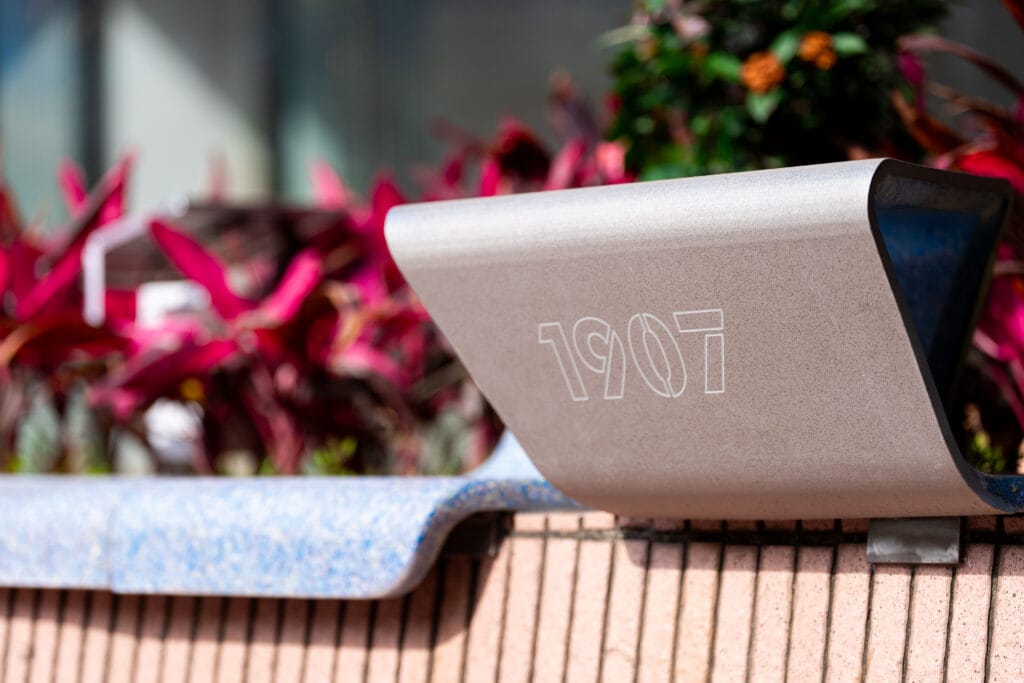
Taking the form of a flowing ribbon, “Tidal Stories” resembles the dynamic sea waves, it evokes memories of how residents used to sit by Hoi King Street and gaze out to sea.
「重溯海角」以流動緞帶為造型,猶如海浪般起伏波盪,喚起居民昔日坐在海景街邊憑欄望海的記憶。
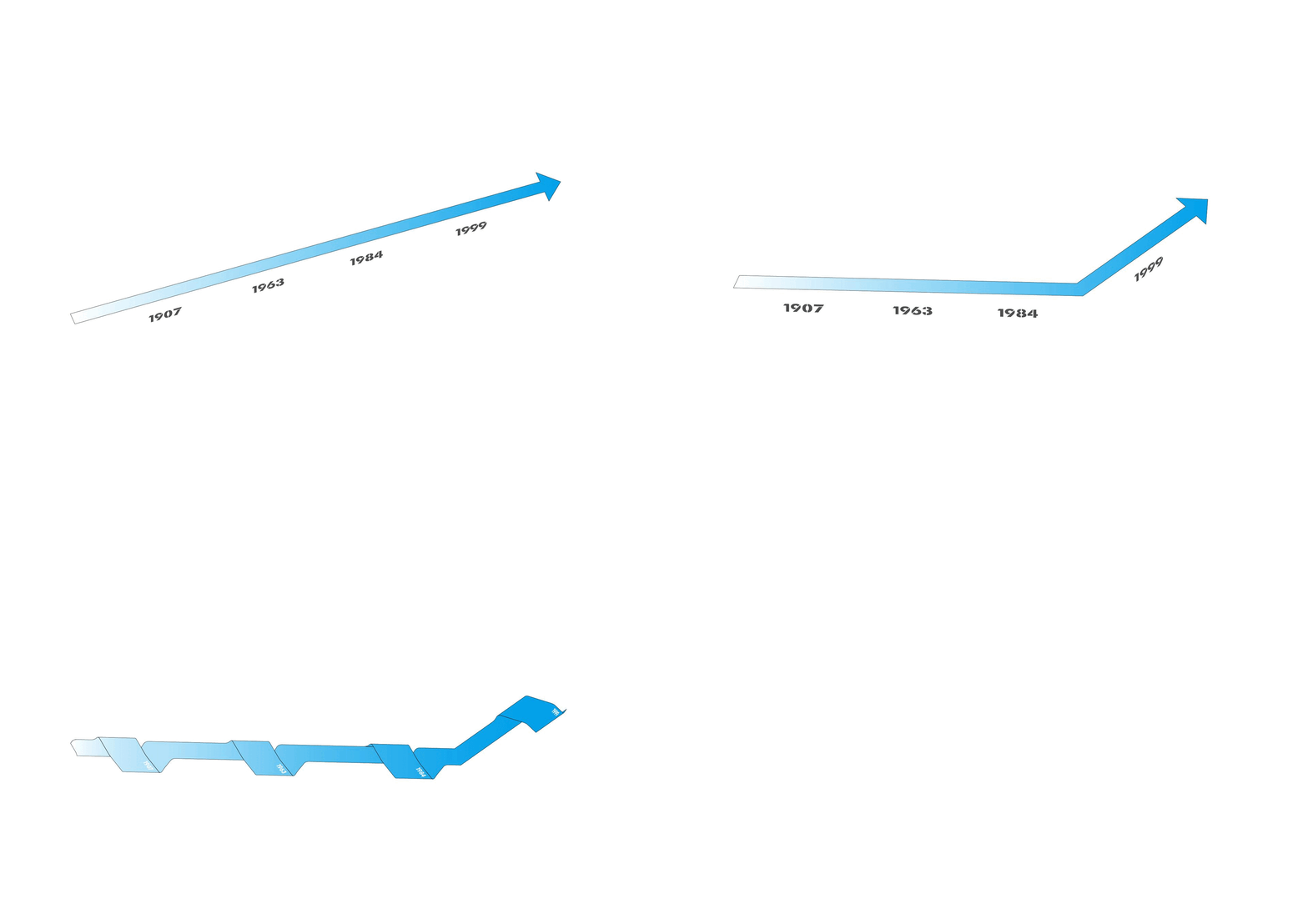
Timeline, Coastlines
時間線,海岸線
The urban furniture chronicles the transformation of the TKT coastline over the last century, reviving memories and preserving the cultural heritage of the community, serving as an exhibition archive.
這個城市家具展示了大角咀海岸線的百年變遷,喚起街坊以往的回憶,並為社區的海岸史作展覽記錄。
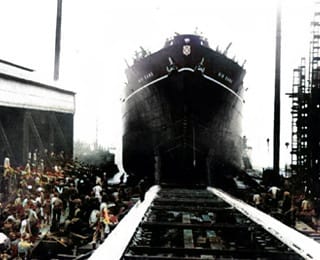
大同船塢, 大角咀醒覺

從大角咀山向大同船塢眺望, 大角咀醒覺

重溯海角 – 大角咀山

1907 大角咀地圖
In 1907, Tai Kok Tsui was an important coastal industrial area, with dry docks and large oil depots.
“Tidal Stories” pays homage to this industrial craft and heritage by incorporating stainless steel material, reminiscent of shipbuilding and light industrial components that defined TKT’s economy and social neighbourhood.
1907年的大角咀曾是重要沿海工業區,設有船塢和大型油庫。「重溯海角」選用不鏽鋼材質向這段工業技藝致敬,令人聯想起當年定義大角咀經濟與社區格局的造船業及輕工業組件。

Material Concept – Folded metal sheet
物料設計概念- 折疊金屬片
The design uses steel as the primary material, reflecting the area’s historical industrial roots. Steel was a versatile material for both shipbuilding and light industry, mirroring TKT’s later development as an industrial hub.
設計以鋼材為核心材質,呼應地區歷史的工業淵源。這種多功能材料既應用於造船業亦見於輕工業,恰與大角咀後續發展成為工業重鎮的脈動相契合。
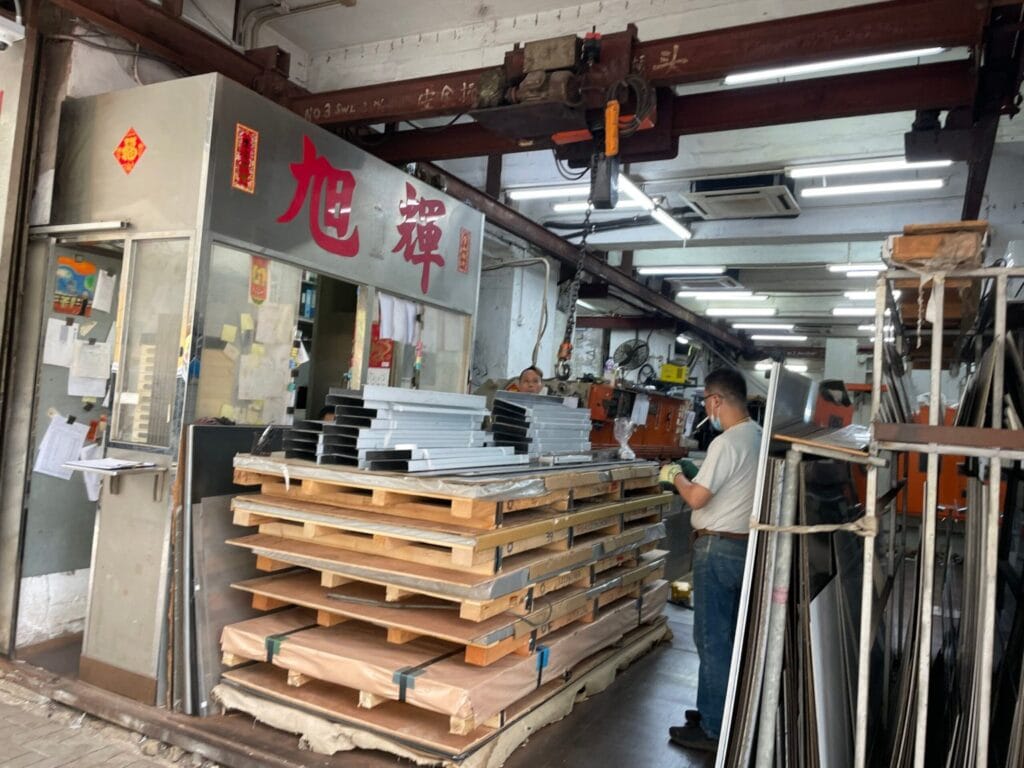
大角咀五金地鋪

折鐵工藝
The shipbuilding industry led to the development of metal and light industries in the area. As time passed, the metal industry gradually declined, and the number of hardware stores in Tai Kok Tsui also decreased.
造船業催生了該地區金屬與輕工業的發展。隨著時代變遷,金屬產業逐漸式微,大角咀的五金行數量也隨之減少。
Sources
1913 map, National Library of Australia
1952 map, National Library of Australia
1965 map, Public Works Department